Thinking about adding a shed, backyard office, or small studio? It sounds simple at first. You look at your yard and pick a spot.
That’s where many homeowners get it wrong.
The space you see is not always the space you can use. Property lines decide where your structure can go. If you guess wrong, you could build too close to the edge or even on someone else’s land.
Before you buy materials or sketch a layout, take time to find your property lines.
Most yards don’t have clear boundaries. There are no lines painted on the ground. Fences, plants, or old walls may look like borders, but they can be off by a few inches or even a few feet.
That small gap matters.
Let’s say you plan to build a backyard office. You think you have enough room, so you place it near the side yard. Later, you find out the real line sits closer than expected. Now the structure sits too close to the edge. Fixing that can cost thousands.
Many homes sit on older lots. Some are uneven. Some have odd shapes. That makes guessing even harder.
A shed or studio may seem small, but it still follows rules.
Most cities require space between your structure and your property line. This space is called a setback. If you ignore it, your project can run into problems fast.
Even a small backyard office can trigger:
And once the structure is built, fixing it is not easy.
That’s why property lines come first. Design comes second.
People don’t mean to make mistakes. They just rely on what looks right.
Here are common habits that lead to trouble:
Those shortcuts feel fine at the start. Later, they create stress.
A backyard project should feel exciting, not stressful.
You can begin with a basic map of your property. County parcel maps often show the shape and size of your lot.
This step helps you understand the layout.
Still, these maps are not exact. They give a rough idea, not a precise line. You should never use them to place a structure.
Think of them as a starting point, not a final answer.
Your property deed includes a legal description. It may list measurements, directions, and corner points.
This information shows how your lot was defined.
The problem is simple. Most people can’t read it easily. The language is technical. The numbers don’t match what you see in your yard.
You can try to follow it, but mistakes happen fast without experience.
Some properties have markers in the ground. These are often metal pins placed at corners.
You might find them near sidewalks, fences, or edges of your lot.
They help, but they are not always reliable.
Pins can move. They can get buried or removed. Landscaping work can disturb them. Even if you find one, you still need to confirm it is correct.
Before you build anything, sketch out your idea first. Think about where the shed will go, how close it sits to the edge, and how much space it really needs.
At that point, it helps to slow down and check your property lines before building anything, so your plan actually matches the space you have.
Then compare your sketch to what you see in your yard. If it feels tight or off, that’s usually a sign something needs a closer look.
A quick drawing like this can save you from a mistake that’s hard to fix later.
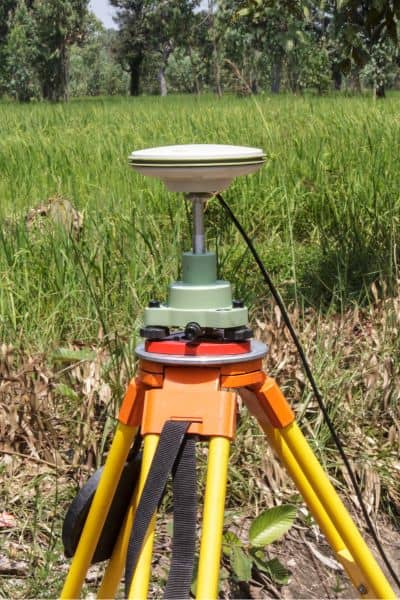
Some projects need more than a guess.
You should confirm your property lines when:
This is the point where guessing stops and real measurements matter.
Once you know your true boundaries, everything becomes easier.
You can place your structure with confidence. You know how much space you have. You avoid building too close to the edge.
Your plans match reality.
This also helps with permits. Clear boundaries make the review process smoother. You avoid delays caused by unclear placement.
And if you ever sell your home, you won’t deal with surprise issues tied to structure location.
Fixing mistakes costs more than preventing them.
If a structure sits in the wrong spot, you may need to move it. That means labor, materials, and time.
In some cases, you may have to remove it completely.
That’s a tough hit for something that could have been avoided early.
Finding your property lines first protects your budget.
Backyard projects add real value to a home. A studio can become a workspace. A shed can solve storage problems. A backyard office can change how you work.
All of that depends on one thing: placing it in the right spot.
When space is limited and layouts vary, guessing is risky.
Take the time to find your property lines before you build. It keeps your project on track and helps you avoid problems later.
Start with the ground. Everything else follows.